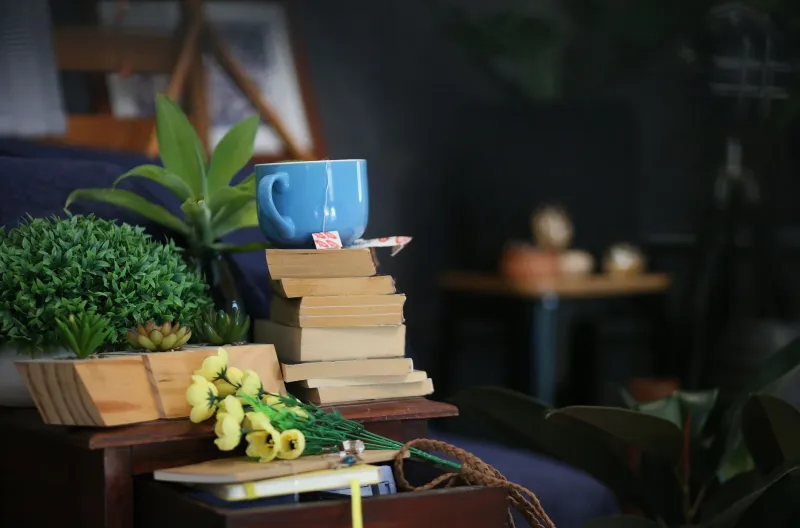
Twenty-Five Minutes of Your Own: Britain’s Lunch Break Is a Reading Room Waiting to Happen
Photo: Arthur Rothstein, Public domain, via Wikimedia Commons
At about 12:31 on a Tuesday, something quietly tragic happens in offices, kitchens and co-working spaces across Britain. Sandwiches come out. Screens stay on. A phone is propped against a mug and the next forty minutes disappear into headlines, group chats and videos of dogs who have learned to ring a doorbell. The lunch break is still there. We have simply stopped using it for anything that feels like ours.
This is not a plea for productivity. Nobody needs to turn lunch into another task with a target and a colour-coded tracker. It is a plea for the obvious: the middle of the day is one of the few stretches of time when many adults are awake, vertical and not technically required to be doing something for someone else. It is also daylight. That matters more than we admit.
The problem isn’t time. It’s the desk.
The desk is a terrible reading room. It comes with a built-in guilt alarm. Every page is interrupted by the sense that you should be replying to something, checking something, proving something. Eating at the keyboard makes this worse. The lunch break becomes a slightly sad extension of work, with crumbs.
What changes things is a small physical move. Put the sandwich in a bag. Put the phone in a pocket, face down. Leave the building. Even if it is drizzling — especially if it is drizzling, because a coat and a bench are cheaper than a spa day — the act of walking away from the desk tells your brain that this bit of the day has a different job.
Libraries are the obvious ally here. Most UK libraries still offer exactly what a lunchtime reader needs: a chair, a table, silence that isn’t hostile, and no expectation that you buy a second coffee to justify your existence. In 2026, with so much of life conducted through notifications, a library at 12:40 feels almost rebellious. You can read for half an hour and leave without having spent a penny. That is not a small thing.
Thirty to forty-five minutes is a real reading unit
The mistake people make is assuming that lunchtime reading has to be Serious Literature with a capital S. It doesn’t. A thirty-minute slot rewards books with clean chapter breaks, a strong voice and a reason to come back tomorrow. Dense, brilliant novels with forty-page unbroken paragraphs are wonderful — but they are not lunch-break books. They are Sunday-morning books. Trying to read them in twenty-five-minute slices is like eating a lasagne with a teaspoon: technically possible, spiritually exhausting.
A handful that work well in short sittings:
- Small Things Like These by Claire Keegan. Short, precise and quietly devastating. You can read a chunk and still have room in your head for the afternoon.
- Convenience Store Woman by Sayaka Murata. Deadpan, odd and full of short chapters that make the clock feel generous.
- The Offing by Benjamin Myers. Lyrical but episodic, with a voice that pulls you back into the page quickly.
- Diary of a Somebody by Brian Bilston. Diary entries and jokes make it ideal for fragmented weeks and interrupted Tuesdays.
- The Summer Book by Tove Jansson. Vignettes, warmth and a seaside mood that survives even a grey Birmingham lunchtime.
None of these require a two-hour bath and a scented candle. They require a chair and the willingness to stop scrolling for a bit.
Three ways to bring back the lunch-hour read
The library lunch pass. Find the nearest library to your workplace and treat it like a room you are allowed to use. Walk there. Read for twenty-five minutes. Walk back. If your library has a lunchtime reading group or a quiet room, even better. If it doesn’t, ask. Libraries are more responsive than people assume.
The office kitchen shelf. Start a small, guilt-free swap shelf: take one, leave one, no sign-up sheet, no committee. The best office libraries are not curated. They are accidental. A paperback someone finished on holiday can become the thing that gets a colleague through a difficult week. Keep it near the kettle, not locked in a cupboard.
The bench rule. One chapter outside, phone in the bag. That’s it. You do not need a lifestyle. You need a coat, a paperback and a bench that isn’t covered in pigeon-related surprises. In winter, downgrade to the library or a café corner. The point is the same: make the middle of the day feel like it belongs to you again.
A small act of attention
The lunch break is not a moral failing if you spend it scrolling. Phones are designed to be very good at exactly that. But books are better at something else: they give your attention a place to land for longer than eight seconds. A chapter at lunch, another at bedtime, one on the bus — that is how a lot of real reading gets done. Not in heroic weekend marathons, but in small, repeatable windows.
So put a book in your coat pocket. Set an alarm for 12:30. Go somewhere that isn’t your desk. Read for twenty-five minutes. If you only manage ten, that still counts. The 12:30–1:15 window has not vanished. It is just waiting for someone to switch it back on.