The 07:42 Book Club: Dispatches from Britain's Most Honest Reading Room
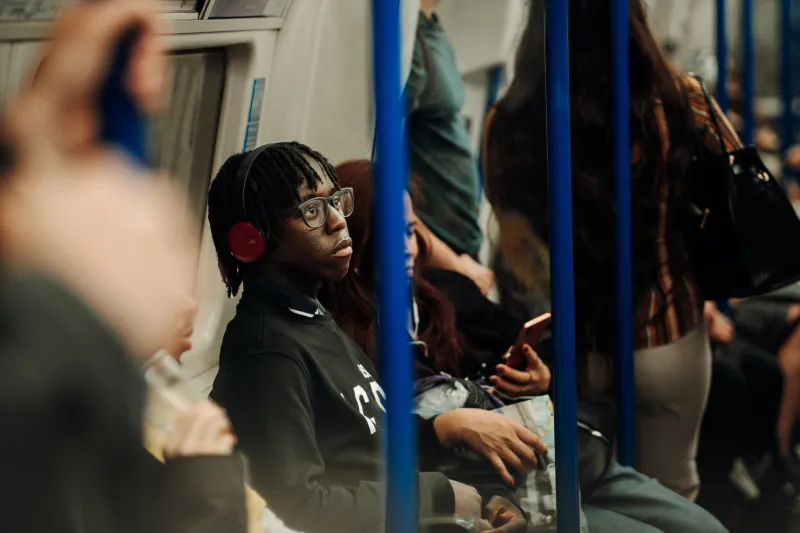
There is a particular kind of silence on the 07:42. It is not the silence of a library, which is self-conscious and slightly performative. It is the silence of forty people who have decided, collectively and without discussion, that the next thirty-eight minutes belong to a book. Someone is reading a thriller with a cracked spine. Someone else is holding a Kindle at an angle that suggests the cover is not for public consumption. A man near the window has a hardback so new it still has the Waterstones bag around it, like a dog wearing a cone. Nobody is watching anybody else. Except me, apparently, because I have made a hobby of it.
The carriage as a reading room
Book clubs are wonderful and frequently dishonest. Someone has always read the book in a rush, someone else has read the Wikipedia plot summary, and at least one person has brought a strong opinion that turns out to be about the film adaptation. The train is different. Nobody on the 07:42 has chosen their book to impress the person opposite. They have chosen it because it fits in a coat pocket, because the chapters are short enough to survive a platform change, or because it was the only thing left on the charity-shop shelf that didn't have a recipe for slow cooker lasagne pressed into page sixty.
That is not to say there is no performance. There is always performance. The removal of a dust jacket to reveal a sober black cover is a move so loaded it should come with a stage direction. The spine-out placement of a Booker-longlisted novel on the table between two coffee cups is a form of semaphore. And the Kindle, bless it, has become the great concealer of our age: a device that can hold Middlemarch and a novel about a cursed lighthouse and a duke with a dark secret, all behind the same anonymous grey screen. In 2026, the most honest thing you can do on a train is read a paperback with a cover you would not defend in court.
A wholly unscientific audit
Over the past few months I have counted books on trains the way other people count sheep. The sample is small, the methodology is nonexistent, and the findings are entirely my own. But here is what the carriages say.
Paperbacks still win. Roughly six in ten readers are holding something physical, and most of those are mass-market editions with the corners turned down. The Kindle accounts for about a quarter, and the phone — that great betrayer of intention — takes the rest. The genres are predictable in the best way: thrillers with the word girl or woman in the title, romantic comedies with cartoon covers, the occasional memoir by someone who was briefly famous in 2019, and a stubborn minority of literary fiction that looks like homework and probably is.
The most interesting category is the book-club pick. You can spot it from three seats away. It is the novel being read with a pencil in hand and a faint expression of duty. The reader turns the pages at a steady, joyless pace. They are not enchanted. They are not bored enough to stop. They are simply a person who has agreed to turn up on Thursday and does not want to be the one who says, 'I didn't finish it.' We have all been that person. The train is where that person goes to suffer quietly.
What travels well (and what doesn't)
A commute is a harsh editor. It strips away pretension and leaves only the question: can you get back into this book in ninety seconds, standing up, with someone's rucksack in your ribs?
Short chapters travel well. Novellas travel beautifully. Essay collections are ideal because they forgive interruption; you can read one piece between Clapham Junction and Waterloo and feel a small, civilised sense of achievement. What does not travel well is dense literary fiction with a family tree at the front and a glossary at the back. I have watched people try. They open the book, read half a page, check their phone, read another half-page, sigh, and put it away. The book goes back into the bag with the quiet shame of a gym membership.
In 2026, the commute has also made a quiet hero of the second-hand paperback. The charity-shop thriller with the water-stained cover is the perfect train book: cheap enough to abandon, gripping enough to keep you awake, and already battered enough that you needn't worry about the drizzle on platform four.
Eavesdropping is a reading skill
Trains are full of people talking about books without meaning to. I once heard a couple conduct a full argument about whether finishing a novel you hate is a moral obligation. She said life was too short. He said he had paid £9.99 and was damn well going to get his money's worth. Neither of them was holding a book. They were, I suspect, talking about something else entirely.
Another time, a stranger leaned over and asked what I was reading. I told her. She pulled a face and said, 'I tried that. Couldn't get on with the narrator.' We spent the next ten minutes recommending books to each other and then got off at different stations and never spoke again. It was, in its way, the perfect book club: no refreshments, no agenda, no obligation to be nice, and a hard stop at the announcement of the next station.
The most honest reading we do
What does the commute shelf say about us? Mostly that we are a nation of private readers who are happy to be public about the act of reading but not about the contents. We will read a book on a train that we would never announce at a dinner party. We will cry at a chapter and then look out the window as if the weather has personally offended us. We will hide a lurid cover inside a plain Kindle case and feel a small, absurd thrill of rebellion.
The 07:42 book club has no reading list, no chair, and no one to impress with a clever observation about the unreliable narrator. It is just a carriage full of people, quietly getting on with it. It is the best book club in Britain, and nobody there knows they are in it. I intend to keep attending, notebook in hand, counting paperbacks and minding my own business. Mostly.