Bury the Custard Creams: A Book Club Letter to 2036
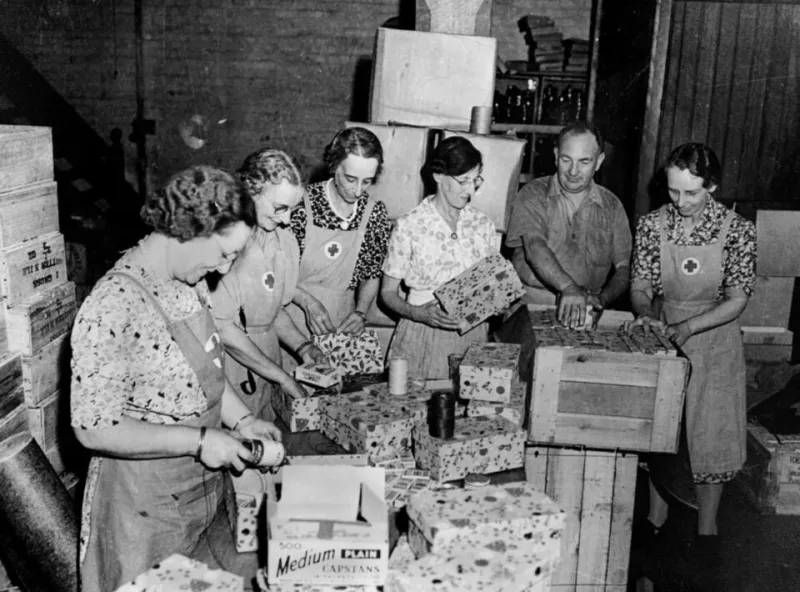
Photo: State Library of Queensland, Australia, No restrictions, via Wikimedia Commons
Every book club has a moment when the conversation leaves the book behind. Someone mentions a leaky radiator, someone else admits they never finished chapter nine, and then a person with a mug in one hand says the thing that changes the evening: we should bury this. Not the book. The whole daft, biscuit-fuelled, mildly argumentative record of it. A time capsule. A message to the book club of 2036.
It sounds like a joke until you try to remember what your group was reading two years ago. Then it sounds like an emergency. Reading lists vanish into WhatsApp threads. Meeting notes become shopping lists. The books themselves get returned, swapped or shoved under a bed. If UK book clubs want to leave evidence that they existed — that they argued about prize lists, borrowed library copies, brought the same packet of custard creams every month — they need to seal something now, while 2026 is still warm.
Put the whole messy list in, not the tidy one
The temptation is to include a neat printed list of titles, maybe with a nice font and a little quote at the top. Resist. A tidy reading list is a poster. A messy one is a portrait. Put in every book your group read in 2026, including the ones nobody finished and the one everyone claimed to have finished but nobody could discuss without checking the blurb. Add the month, the chooser, the average score, and one line about the argument it caused. Include the abandoned books, the split votes, the moment someone said the ending was obvious when it absolutely was not. This is the stuff that will make a 2036 reader laugh, wince and feel less alone.
If your club keeps a spreadsheet, print it. If it keeps a notebook, tear out the relevant pages. If it keeps everything in a group chat, screenshot the best rows and type them up. The point is not accuracy. The point is texture. A list of 2026 books tells you what people read; a list with scores, complaints and a note about whose turn it was to bring the milk tells you how they lived.
Snacks are primary sources
Here is where the time capsule earns its place beside the best social history. A custard cream wrapper, flattened and sealed in a bag, is not litter. It is evidence. It says: we met in a room with a kettle, we had a budget of about four pounds, and we believed that a chocolate digestive could keep a difficult conversation going for another twenty minutes. Add a snack menu. Note who brought the grapes and who brought the crisps and who always said they were not hungry before eating half the packet. If your group has a rota, include it. In 2036 it will read like a village newsletter from another planet.
Do not, obviously, bury actual food. A half-eaten Hobnob will not improve with age. Wrap dry wrappers separately, write the date on them, and keep them away from anything damp. If you want to be fancy, use a small paper bag and label it with the month. If you want to be honest, scribble on the back of the bag: the night we argued about the Booker shortlist for forty minutes and forgot to decide the next book. That is the kind of relic a future book club can use.
What the 2026 list will betray
In ten years, a reading list stops being a list and becomes a mood ring. Our 2026 choices will show a group hedging its bets: one climate novel to stare at the weather, one cosy crime to forget it, one prize shortlist to prove we are serious, and one comfort re-read because someone needed it. It will show library holds, charity-shop finds and paperback swaps. It will show whether we were reading to face the news or to get away from it. Probably both, often in the same month.
That is not a failure of taste. It is a portrait of a reading life. Future members will see that we were anxious, curious, easily distracted and quite keen on a detective. They will notice which books we pressed on each other and which ones we quietly returned. They will see the year we tried to be ambitious in January and the month we gave up and read something with a cat on the cover. Good. Let them see it. A time capsule that only contains the impressive stuff is not a time capsule; it is a job application.
A time capsule needs a lid, not a lecture
Practicalities, briefly. Use a tin or a plastic box with a proper seal, not a shoebox held together by hope. Print on ordinary paper and accept that it may yellow; a handwritten letter is better than a QR code that will be useless by 2036. Include a one-page letter to the future group explaining who you were, where you met and what you argued about. Add a sheet of questions for them: what are you reading? What do you miss? What do you think we got wrong? Put in a silica gel sachet, label the outside with the date and the words open in 2036, and store it somewhere dry and boring. A cupboard is fine. A library or bookshop is better, with permission. Appoint one person as guardian and set a calendar reminder now. Then resist the urge to open it in six months to check whether the biscuit wrapper is still there.
The gentle prophecy
In 2036, someone will open the tin and laugh at our font choices, our must-read stickers and our solemn notes about reading goals. They will probably be reading in ways we cannot predict, on devices we have not heard of, with libraries that have changed and bookshops that have moved. But they will recognise the tea rings, the split votes, the person who always brought too many biscuits. They will see that we were trying to make sense of the year with other people in a room. That is the real message.
So before the Christmas do, before the list gets overwritten by next year, bring a tin to your next meeting. Argue about what goes in. Seal it before anyone can edit. Bury the custard creams. Bozbooks approves.