The Front Table Doesn't Lie: A November Audit of Britain's Bookshop Displays
The table is the message
Walk into almost any British bookshop in mid-November and you are not really being greeted by a room full of books. You are being greeted by an argument. The front table has been built, stacked, fanned and rehearsed. It is the shop's opening statement, its handshake, its slightly desperate smile. And in 2026, that smile is wider than ever.
The scent is familiar: cinnamon from a candle display nobody asked for, damp wool from the person ahead of you, and the particular paper-and-glue smell of hardbacks that have just been released in time for the gift-buying season. The table itself is a small theatre of taste. Face-out covers lean back like they're posing for a portrait. Spine-out books are crammed in behind, doing the literary equivalent of waving from the back of a crowded bus.
What the front table sells is not just books. It sells reassurance. It sells the idea that you can solve Christmas, birthdays and the vague guilt of not reading enough with one well-chosen hardback. And it tells you, in the blunt language of retail, what British readers are supposed to want right now.
Face-out economics: the quiet power of a good lean
Let's be clear about how this works. A face-out book is not simply a book that has been judged attractive. It is a book that has been chosen. Publishers pay for prime placement, booksellers fight for the right titles, and the table becomes a negotiation between commercial muscle and genuine enthusiasm. When a bookseller puts a book face-out, they are saying: this one. Not the whole shelf. This one.
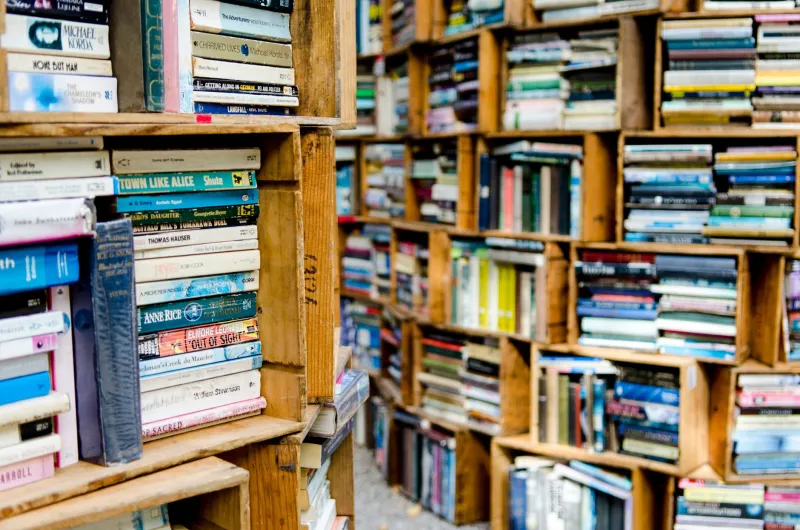
Spine-out, by contrast, is the bookshelf equivalent of being sent to Coventry. It is not an insult, exactly. Plenty of brilliant books live spine-out for years, quietly waiting for the right reader to pull them free. But in November, spine-out is a kind of exile. It means the shop has decided that your cover, your title or your author's name is not quite enough to stop a shopper in their tracks.
And shoppers are easily stopped. We like to think we browse with discernment. In reality, most of us scan the front table in about six seconds, pick up the book with the nicest jacket and the most legible font, read the first line, and decide. The table knows this. The table is not judging us. The table is simply trying to make the decision easier.
Celebrity memoirs, cosy crime and the great 2026 comfort blanket
This year's November tables are a fascinating mix of the safe and the softer. Celebrity memoirs remain the hardback equivalent of a tin of Quality Street: familiar, brightly wrapped, and almost impossible to resist even when you know exactly what's inside. There is a particular genre of 2026 memoir — the mid-career comedian, the national treasure, the sports person who has decided to tell us what it all meant — that seems to arrive every November like clockwork.
Then there's cosy crime, which in 2026 is less a genre than a national mood. The covers are all pastel cottages, nosy vicars, cats with attitude and titles that sound like they should be solved over a scone. These books sell because they are safe. They are the reading equivalent of a Sunday night detective drama: you know the shape of the story, you know the murderer will be caught, and you know you will feel better at the end. In a year that has been, let's say, eventful, that is not a small thing.
But the table is also full of worthy, handsome novels — the ones with the gold foil, the prize stickers and the quotes from authors you vaguely recognise. These are the books publishers hope will become the Christmas hit. Some of them will. Many won't. And a few of them are genuinely wonderful.
The ones pushed spine-out
Here is the uncomfortable truth about November bookshops: the front table is a risk-averse place. It has to be. Booksellers are running a business, and the table has to pay for the rent. That means the weird stuff — the translated novellas, the small-press debuts, the poetry pamphlets, the novels that don't fit neatly into a single sentence — often gets pushed to the side, spine-out, waiting.
This year there are 2026 titles that deserve far better. The Welsh-language novel in translation that has been quietly gathering word-of-mouth praise. The debut from a Sheffield independent press that does something genuinely strange with structure. The essay collection about council estates and class and memory that is too sharp to be a stocking filler and too good to be ignored. The nature-writing memoir from a poet who lives on the coast and writes about grief and gulls in the same breath. None of these will be on the front table in your local Waterstones. Some of them might not even be in the shop at all. But they are the books that make a bookshop worth visiting in the first place.
This is not a complaint about booksellers. It is a complaint about the system that makes face-out placement so expensive, so central and so predictable. The front table is a self-fulfilling prophecy. It sells what it displays, and it displays what it thinks will sell. The books that fall outside that loop are not worse. They are often better. They are just harder to sell in a six-second scan.
The Christmas gift reflex
There is another thing the November table knows about us: we buy differently in December. We buy for other people. We buy hardbacks because they feel like presents. We buy books we would never read ourselves because they look like they might be good for someone else. The table is full of books that say 'gift' more loudly than they say 'read me.'
That's why you see so many memoirs, cookbooks, illustrated histories and elegant little volumes about trees, tides and the meaning of home. They are not really books. They are objects. And in a British winter, there is something deeply comforting about giving someone an object that doesn't need charging, doesn't need updating and won't be obsolete by January.
But the best gifts are the ones that surprise. The friend who hands you a spine-out novel you've never heard of and says 'just read it' is giving you something better than a safe bet. They are giving you their taste. They are saying: this one. Not the whole shelf.
A modest proposal for the 2026 front table
If I could change one thing about Britain's November book displays, it would be this: every front table should have a small, stubborn corner labelled something like 'The Spine-Out Champions.' A place for the books that don't have the marketing budget, the celebrity author or the pastel cottage on the cover. A place where a bookseller can put their genuine enthusiasm, not just their commercial obligation.
Some shops already do this, quietly and without fanfare. They are the ones worth seeking out this month. They are the ones where the table feels like a conversation rather than a billboard. And they are the ones where you are most likely to find the book that actually changes your year, not just fills a stocking.
So this November, when you walk past the front table and see all those confident, face-out covers leaning back at you, take a moment. Then look behind them. Look at the spines. Look at the books that didn't make the cut. That's where the good stuff often hides. And if you find something brilliant, tell the bookseller. They'll probably put it face-out next time.