The Stranger in the Margin: What Pre-Loved Books Whisper Back
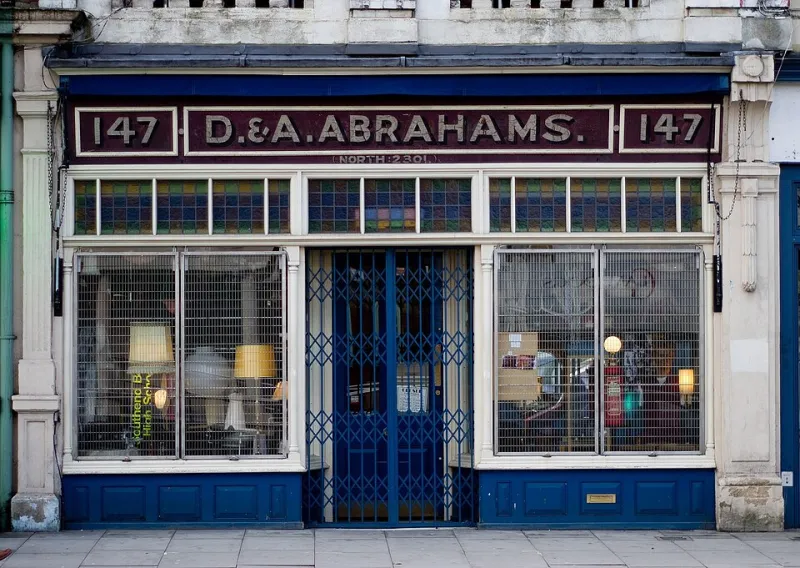
Photo: Jim Osley , CC BY-SA 2.0, via Wikimedia Commons
On a damp Saturday this November, I bought a 1970s Penguin paperback from a charity shop in Leeds for £1.50. It was The Mill on the Floss, and inside the front cover someone had written: “To Margaret — Christmas 1978. May this be the year you finally finish Middlemarch.” It was the wrong book, which somehow made it better.
Second-hand books are usually sold as text plus damage. But many arrive with a second narrative: a name, a date, a warning, a joke, a shopping list, a furious little pencil mark beside a paragraph the previous owner clearly could not bear. These traces are not flaws in the product. They are the product’s memory. And in a year when so much of our reading is tracked, rated and quietly logged by apps, there is something stubbornly human about a book that arrives already annotated by a stranger.
The Dedication Is the Blurb You Were Never Meant to See
A dedication turns a copy into an object with a before and after. “To Dad, who lent me the money and never asked for it back.” “For Alice, because you said you’d read it if I stopped going on about it.” “Happy birthday, love — sorry it’s second-hand.” The last one is my favourite, partly for the honesty and partly because it suggests the giver knew the recipient well enough to be cheap and unembarrassed about it.
I asked Nell Harper, who runs a second-hand bookstall in Sheffield, about the oddest inscriptions she has found. She did not pause. “The strangest I’ve had was ‘To Derek, sorry about the budgie.’ I still think about the budgie,” she said. “You get a lot of ‘To Mum, do not lend this to Auntie Jean’ as well. Family politics, pressed flat between pages.”
A bookseller in Hay-on-Wye told me about a copy of Persuasion with a note in the back: “If you get to the end, ring me. I mean it.” No number. Another, in Norwich, found a line that read: “For my husband, who will never read it. His loss.” These are not just charming oddities. They are evidence that books are given, borrowed, resisted, argued over and occasionally used as instruments of domestic revenge. Reading has always been a social ritual, even when it looks like a solitary one.
What Booksellers Find Between the Pages
The margins are where the real gossip lives. One bookseller showed me a copy of The Remains of the Day with “He is not reliable” written beside a passage about Stevens. Another had a history of the Second World War annotated with “rubbish” so many times that the pencil had almost worn through the paper. A third found a bookmark made from a betting slip, a hair grip and a recipe for rock cakes. The recipe had been corrected in biro.
These notes are not always useful, and they are not always welcome. A stranger’s underlining can feel like someone talking through a film. But when it is good, it is very good. You turn a page and find “yes!” beside a sentence you had also wanted to cheer. You find “see p. 84” and discover a connection you missed. You find “this is where I gave up” and feel a sudden, ridiculous tenderness for someone you will never meet.
That is the argument for buying a book that has been loved out loud. A clean copy is a blank. An annotated copy is a witness. It reminds us that reading is not just consumption; it is company.
What to Do When the Book Comes With a Stranger Attached
A practical guide, then, for the curious buyer.
- Read the inscription before you commit. It is part of the book’s condition now. If a note makes you uneasy — or if it is clearly a private message that has fallen into the wrong hands — you are allowed to put the book back.
- Decide whether you want a reading copy or a relic. Sometimes you want the cleanest text possible. Sometimes you want the copy with “For Margaret, Christmas 1978” in it. Both are honest purchases.
- Do not erase ink. Pencil can be carefully lifted with a soft eraser if it obscures the text, but even then, think twice. You are not tidying a manuscript; you are removing provenance.
- Never use sellotape. It yellows, cracks and takes a little of the page with it. If a jacket is loose, leave it loose or ask a conservator. Store books upright, out of damp, and away from radiators.
- Photograph or transcribe the best notes. If the inscription matters to you, make a record. If you lend the book on, add your own note. The chain is the point.
- Take an annotated copy to book club. It is a shortcut to argument. “Why has someone written ‘coward’ next to this paragraph?” is a better opening question than “Did we all like it?”
The Value of a Book That Has Been Loved Out Loud
We thrill to signed first editions because they promise proximity to the author. Inscriptions offer proximity to an ordinary reader — someone who bought the book in a hurry, wrapped it in paper, wrote something slightly awkward and hoped for the best. That is not a lesser kind of value. It is a different one.
Charity shops are accidental archives. Every donated paperback is a small decision about what to keep and what to release. The notes inside are the residue of those decisions. In 2026, when our reading lives are increasingly neat and measurable, the margin note remains gloriously unmeasured. It cannot be star-rated. It just sits there, saying: I was here, and I had opinions.
So buy the book. Keep the note. Or pass it on with a note of your own. Signed, sealed, re-sold — and still talking.